
Introduction
Business Dependency Network makes the invisible constraints visible. In federated and multi-programme environments, the biggest risks to delivery aren't inside individual workstreams but between them. This artefact surfaces the cross-boundary dependencies that determine what can move in parallel, what must wait, and where a single delayed decision cascades across the entire transformation.
Purpose | Map cross-boundary dependencies that constrain sequencing and expose critical path risk |
Output | Dependency Network Diagram, Critical Path View, Decision Gate Register |
Who's Involved | Programme leads, enterprise architects, delivery managers, senior sponsors |
Duration | 4-8 hours per dependency domain |
Phase | Architect |
Lens | Integration |
Steps
Identify the major capability blocks, programmes, and infrastructure decisions in scope
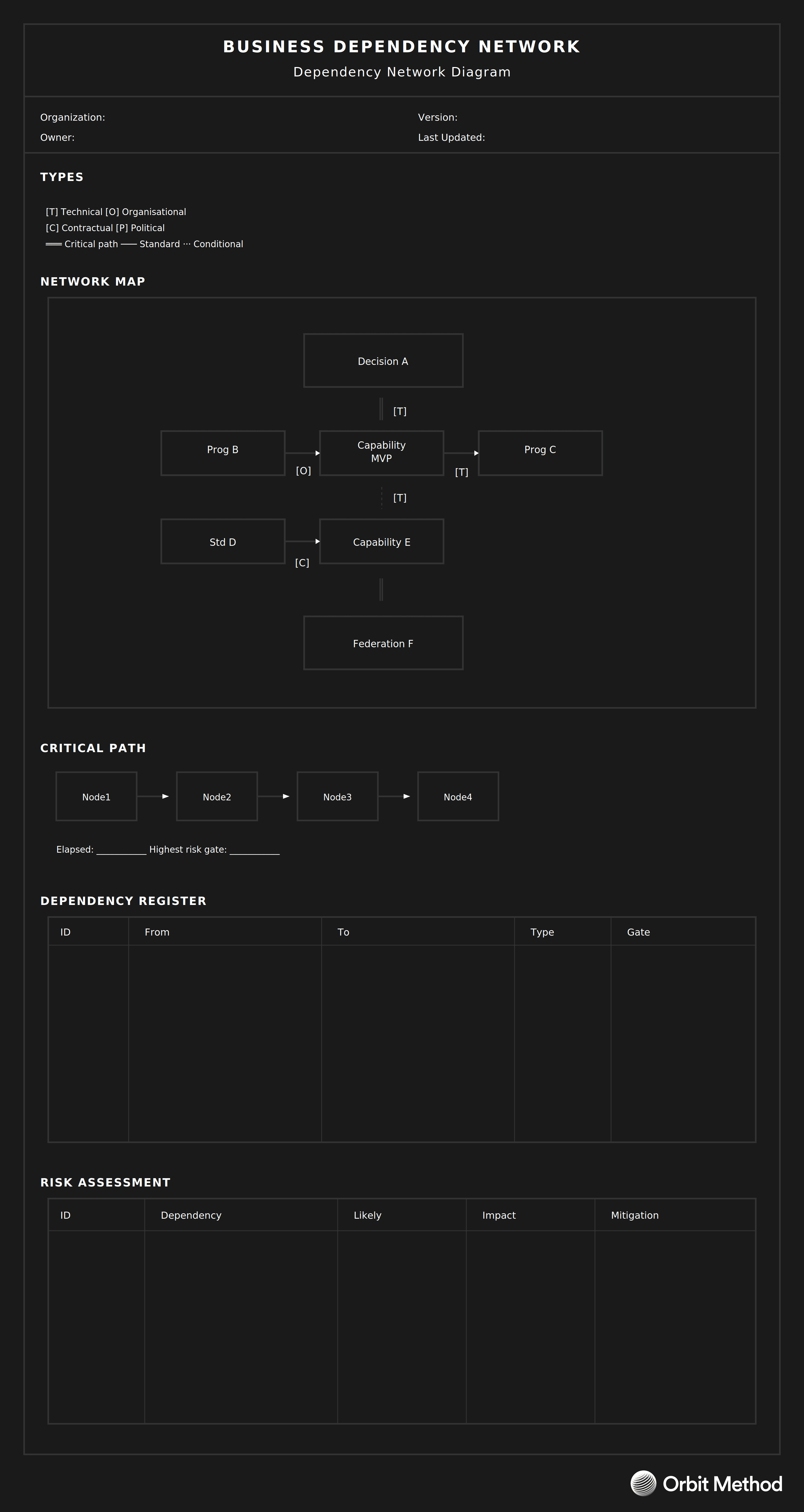
Map directional dependencies between them (what gates what)
Classify each dependency by type: technical, organisational, contractual, political
Identify the critical path and parallel execution opportunities
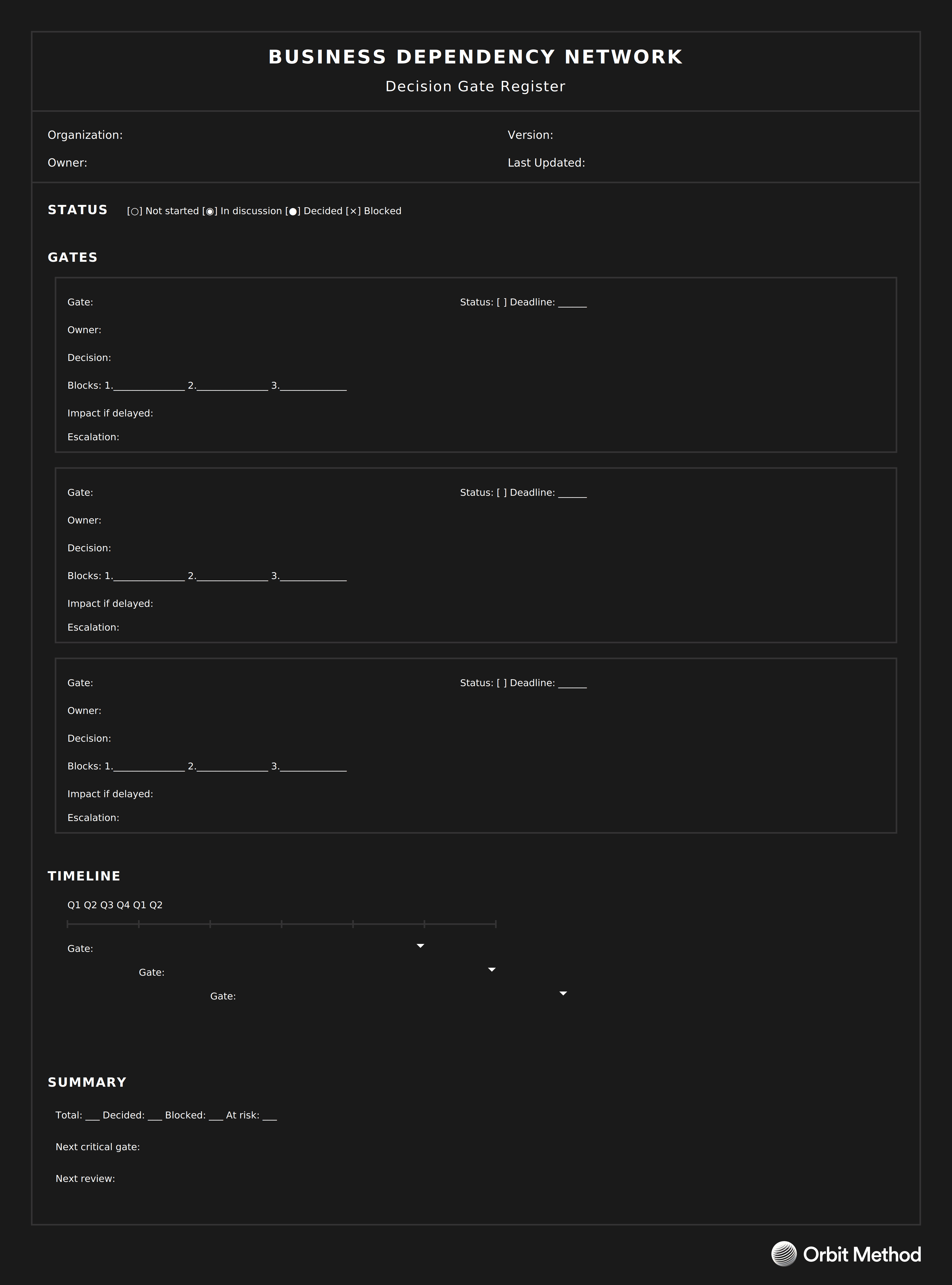
Surface decision gates: where a decision by one party blocks progress for others
Assess risk and likelihood of delay per dependency
Document in Dependency Network Diagram with critical path highlighted
Create Decision Gate Register linking dependencies to owners and timelines
Templates
Dependency Network Diagram
Decision Gate Register
Continue reading
Looking to contribute?
Orbit evolves through practice. Whether you're applying the method, testing ideas, or finding gaps, your experience helps refine it. Share what you're learning and help shape the next update.